
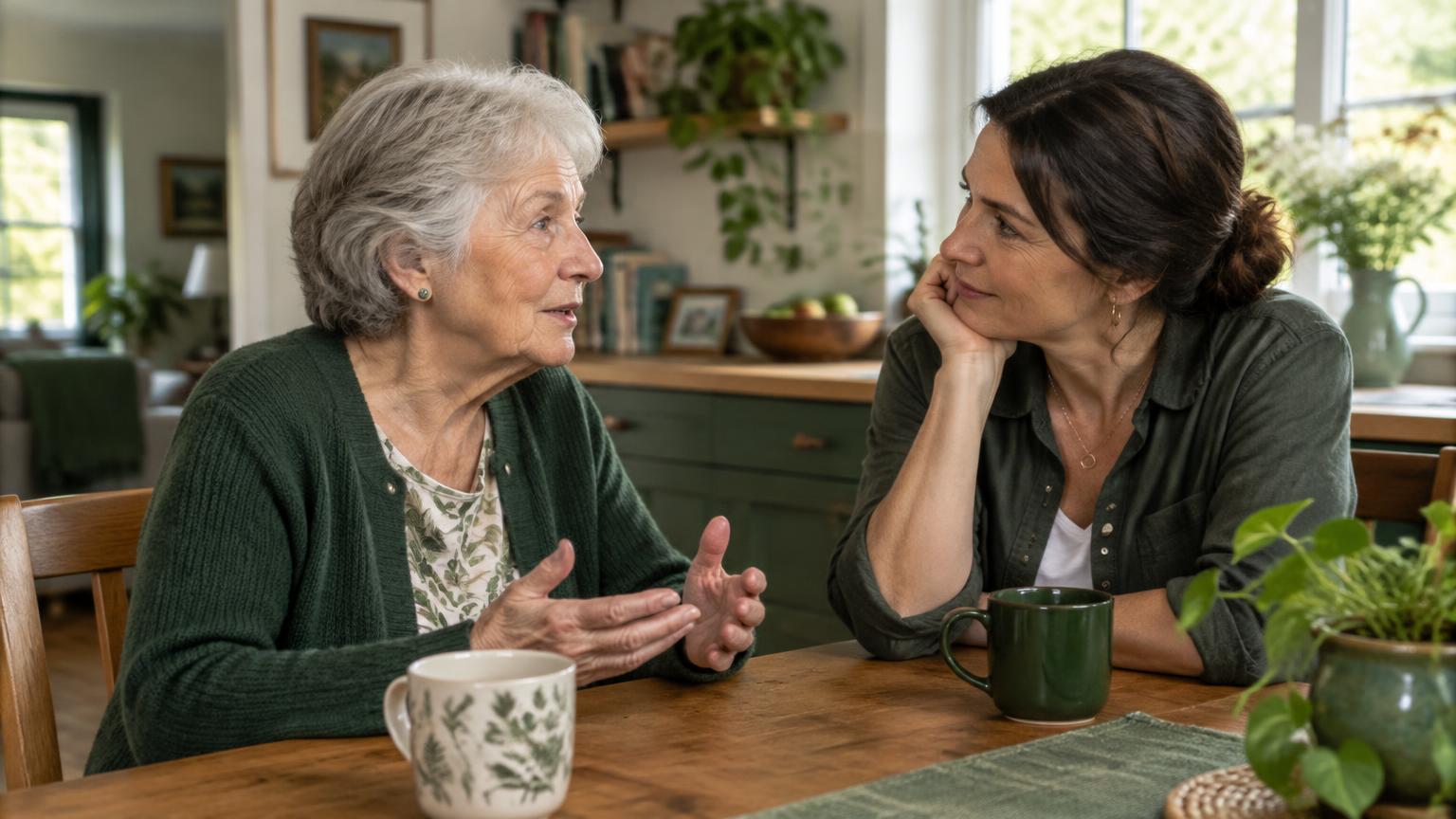
When a loved one living with dementia becomes upset, the situation can feel personal. The Alzheimer’s Association explains that anger or aggression can reflect discomfort, surroundings or communication difficulties—not deliberate behavior. Caregivers do not have to diagnose the cause to ask for help. [1]
Safety comes before a routine
For immediate danger or a medical emergency in the U.S., call 911. Sudden confusion is not something to dismiss as dementia; see our sudden-confusion guide. New or suddenly worsening behavior needs medical assessment. Do not wait for a course, a routine care-help reply or a completed notebook before seeking help. [1]
Make communication less demanding
- Speak calmly and use short, clear sentences.
- Listen to the feeling rather than arguing about the facts.
- Reduce unnecessary noise and avoid crowding the person.
- If everyone is safe, pause a frustrating task and try again later.
These are supportive communication approaches, not treatments. Follow the individualized care plan and ask the qualified care team what approaches fit this person. Never change medicines or use restraints on your own. [1]
Describe what happened, not a label
Instead of “She was impossible,” describe what you saw and heard, when it happened and what you did. For example, a fictional note might say: “At 8:15 p.m., she said ‘I want to go home’ three times while we were preparing for bed. I paused the task and spoke quietly.” Include whether this was different from usual and who you contacted. Do not present your interpretation as a diagnosis.
Plan support before the next difficult night
Write down the care team’s daytime and after-hours contacts. Identify a backup person and the tasks you need help covering. Respite can provide temporary relief while the person continues receiving care; ask providers about staff training, availability, costs and whether they can meet the person’s needs. No placement or service availability is guaranteed. [2]
Explore our family support page and caregiver resource guide. For ongoing, non-emergency help exploring care or community support, request care help. Keep that form general; do not include diagnoses or another person’s private health information.
When a concern needs reporting
Dementia education is not abuse-reporting training. If you work in Texas assisted living and want to practice recognizing and reporting abuse, neglect or exploitation, explore Power Up: Report It Right. It is educational, not legal advice or accredited continuing education, and is not a dementia-treatment course. Never delay urgent help or a required report to complete training.
Sources and scope
General caregiver education—not diagnosis, treatment or an individualized care plan.